A short history of
the editorial flat-lay.
From Avedon's Harper's Bazaar to your Shopify product page. The grammar of the still life, distilled for working designers.
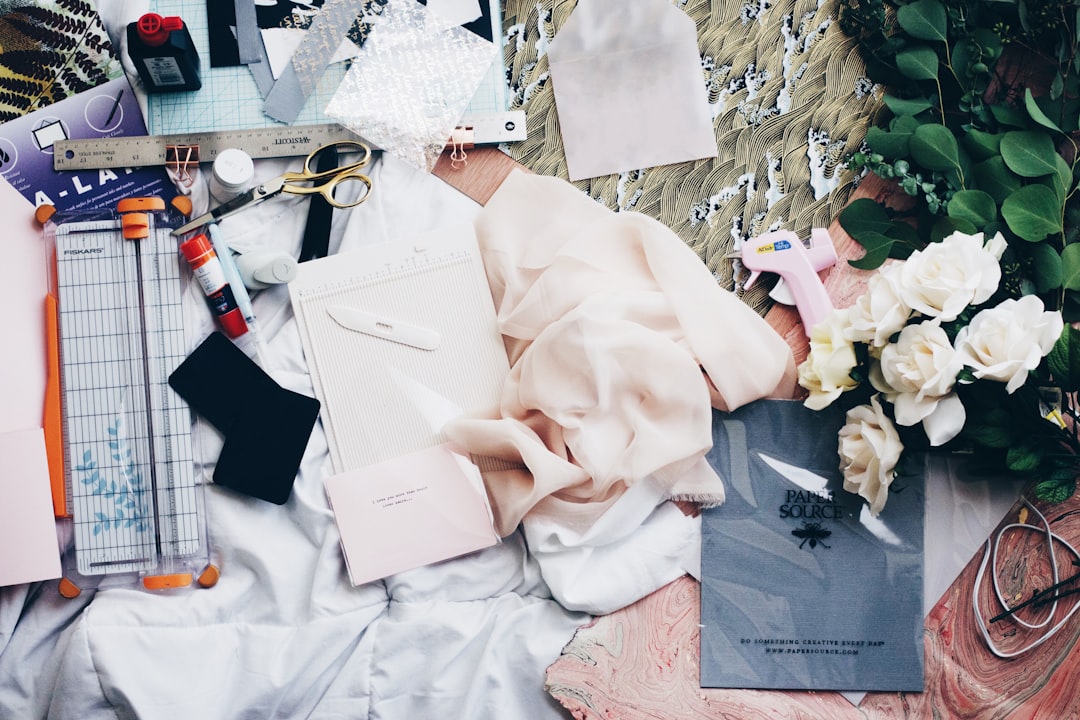
The flat-lay is the oldest grammar in fashion photography. Before there were models, before there were studios, before there were Vogue editors negotiating exclusivity for a Paris collection — there was a garment on a table, lit from one side, photographed from above.
The first flat-lay we have evidence of was published in La Mode Illustrée in 1869. A linen blouse, three hand-tinted illustrations of detail (cuff, collar, hem), shot on a velvet drape. The intention was the same as your Shopify product page in 2026: show the fabric, show the cut, show the detail that justifies the price.
The Avedon era — 1947 to 1965
Richard Avedon and his contemporaries at Harper's Bazaar formalized the still-life grammar into something photographers today still use without knowing it. Avedon's flat-lay rules, which we recently codified into a Drape brand kit you can borrow:
One direction of light. A flat-lay shot under diffuse light from every angle reads as a Pinterest mood board, not as editorial. The garment needs a clear primary light source, even when the source itself is not visible. Avedon used a 24-inch parabolic from camera-left at 35°. We default to this in our Editorial Brutalist mood.
Asymmetric composition. The garment must lie at a deliberate angle to the frame. Centered, axis-aligned flat-lays read as catalog photography. Avedon would tilt his shirts 7°–12° off axis and let the hem extend past the frame edge. The eye reads this as a moment caught, not a product staged.
One accessory, never more. A leather glove. A folded note. A coffee cup. A single secondary object grounds the garment in a world. Two objects make it a still life. Three makes it a Wes Anderson set.
The flat-lay is not about the garment. It is about the world the garment lives in. The garment is the protagonist, not the only character.
The Pinterest era — 2012 to 2020
Then came Pinterest and the flat-lay became a content type. Suddenly every fashion blogger had a marble table, a sprig of eucalyptus, a single croissant, and a flat-lay. The grammar collapsed into a single visual cliché. The same beige cardigan, on the same marble, with the same coffee cup, in three million blog posts.
This was not Pinterest's fault. Pinterest just gave a name and a scroll velocity to a thing that already existed: the democratization of the still-life genre. Once anyone could shoot a flat-lay on their iPhone, the grammar that took Avedon and his peers a generation to refine was flattened (no pun) into a single rule: "shoot from above, on a neutral background, with one accessory."
The result was a decade of fashion content that looked the same, sold mediocrely, and trained the next generation of designers and brand directors to think of the flat-lay as a low-skill genre.
The Drape era — what we propose
We think the flat-lay deserves better. We think it is, in fact, the most undervalued single photograph in any fashion brand's library, because it is the photograph that:
Reads on a phone screen at thumbnail size. A great flat-lay communicates fabric, cut, and brand identity in a 200×267 pixel grid. A model shot does not. Try it on your Shopify product page.
Survives translation. A flat-lay does not require a model's gender, body type, or skin tone to be relatable. It is a universal object photograph that an Atelier in Lisbon can sell to a customer in Tokyo without re-shooting the campaign.
Trains generative models honestly. A flat-lay is the photograph that contains the most information about a garment per pixel. Fabric weight, drape, color, fit details, hardware. When we generate a campaign in Drape from a single source image, the flat-lay is the source we want. We can derive everything else from it.
A great flat-lay is the most information-dense photograph in a fashion brand's library. Treat it accordingly.
How to shoot one today (in your storeroom, at 4 PM)
You do not need a Milano studio. You need light, a neutral surface, and the discipline to compose deliberately. Specifically:
North-facing window, two hours before sunset. The light is soft, directional, and slightly warm. Shoot with the window at camera-left, at a 35° angle relative to the garment's long axis. Block the window down to a 60×80 cm panel with a piece of cardboard — too much spread reads as catalog.
Surface: aged paper, raw plaster, dark walnut. Anything except marble (overused) or pure white (too bright). The surface is part of the composition, not a neutral backdrop.
Tilt the garment 9° clockwise from horizontal. Let one corner extend past the edge of your frame. This single act will instantly make your flat-lay read as editorial instead of catalog.
Add one accessory. Never two. A folded card with a handwritten word. A single coin. A sprig of dried lavender. The accessory grounds the garment in a story without overcompeting.
Shoot at f/4 from 80 cm above, with the camera lens parallel to the surface. If you are using an iPhone, turn off any built-in beautification, shoot in RAW, and import to Drape directly. We have built our extraction pipeline to read iPhone RAWs natively. The output campaign frames will be 4K.
The single rule, if you remember nothing else
A flat-lay is a self-portrait of your brand. If your flat-lay looks like everyone else's marble-and-eucalyptus Pinterest cliché, then your brand looks like everyone else's brand, and you have made the algorithm's job of forgetting you faster.
Shoot deliberately. Tilt deliberately. Light deliberately. The Avedons of the 1950s would recognize what you are doing. And the customers of 2026 will buy what you are selling, twice as often, at double the price.