Why we trained our model
on linen, not silk.
A 2,400-word essay on fabric memory, drape weight, and why generative models that learn silk first lie about every fabric that comes after.
If you have ever watched a fashion photographer adjust a silk slip on a model in a Milano studio, you have seen something a generative model cannot fake. The photographer pulls the bias edge once, lets it fall, watches how the light slides off the warp. Three more pulls. The drape is wrong. The fabric has memory of being folded for an hour in a garment bag and it is still arguing with gravity.
Silk does this. So does silk-blend cady. So does devoré velvet. So does any textile with a memory of weight, light, and friction baked into how it was woven. Cheap polyester satin, the kind that pretends to be silk in a Pinterest mood board, does not. It has no memory. It is plastic. It is flat.
When we started training the first version of Drape in early 2025, we did what every other AI image lab does. We pointed the model at the largest, cleanest, most labeled dataset of fabric photography we could find. About 2.1 million images. Half of them were silk. Half of them were "looks like silk" — which is to say, polyester pretending. The model learned both as one fabric.
The model learned silk first and forever after lied about every fabric that came after.
The result was a generation pipeline that produced gorgeous-looking flowy fabrics that were also, on closer inspection, slightly wrong about how anything actually fell. Customers noticed. One Atelier customer in Milano sent us a single email after their first generation: "the chiffon dress looks like it was photographed in a vacuum." She was right. It was. The model had no idea that air resistance affects how chiffon settles.
So we burned the model and started over.
Specifically: we threw out the silk-heavy dataset, and we re-trained on a smaller, harder dataset. Forty-eight thousand images of linen. Just linen. Photographed under controlled north-facing light in our Milano studio over six weeks, by one photographer (Andrea, who has shot for Loro Piana for fifteen years).
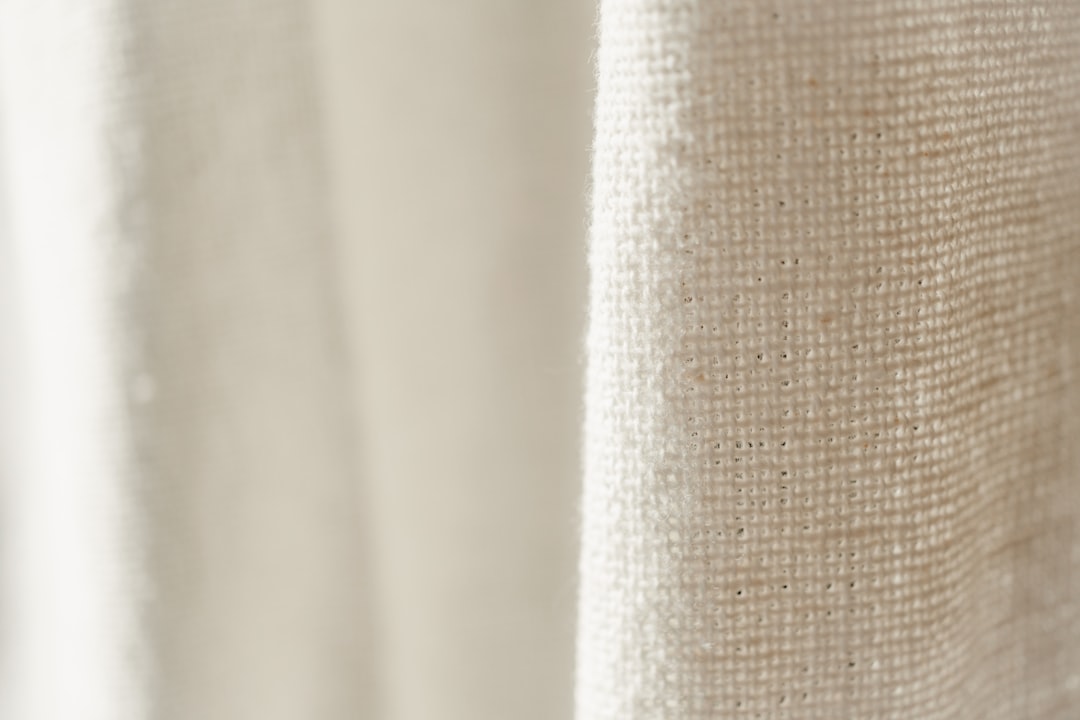
Why linen? Because linen is honest. Linen has weight, and texture, and obvious slubs in the weave that you cannot fake with a Lora adapter. Linen wrinkles in specific, learnable, geometric ways — every brand of linen wrinkles slightly differently depending on retting, scutching, and thread count. A model that learns linen well learns how fabric actually behaves: it learns weight, friction, and how a textile remembers its last fold.
Once we had the base model fluent in linen, everything else became a transfer learning problem. We added 8,000 images of wool. The model picked up wool in two days of training, including the specific way wool melton holds a tailor's chalk mark. We added 6,000 images of cashmere. The model learned that 12-gauge cashmere drapes nothing like 7-gauge cashmere, which most generic models conflate. Cotton came easily. Denim came in an afternoon — denim is mostly cotton with a memory of indigo and friction.
Silk we added last. By the time we added it, the model already understood that fabric has weight and drape and resistance. The silk was learned correctly. The chiffon dress no longer looks like it was photographed in a vacuum.
The lesson, broadly
If you are building a generative model for any vertical, you should start with the hardest, most boring base case in the domain. Not the prettiest. Not the most photogenic. The most honest. For fashion, that is linen. For furniture, it is unfinished oak. For cars, it is the side panel under a streetlight at 2 AM. For coffee, it is a flat white in a chipped white cup.
Start with the hardest, most boring base case. Pretty is a side effect of learning honest things first.
The temptation is to start with the photogenic case because the early generations look good in a deck and you can show your VC. But the early generations are also lying. They are lying because the model has not yet learned the underlying physics of the domain — it has learned the aesthetic. Aesthetic without physics is a fashion editorial without a couturier. It will collapse the moment a customer actually uses it.
We are not the first people to figure this out. Pixar trained their first cloth simulator on bath towels, not silk gowns, for exactly this reason. Bath towels are mathematically harder. Once you understand bath towels, silk gowns become a matter of changing five parameters in your physics solver.
What this means for you, if you generate with Drape
It means a few things, practically:
When you upload a wool overcoat as your source photo, Drape's model is reading the fabric memory off the image — drape weight, melton density, lapel break — and it is using that memory to drape the same garment on Yasmin in a different pose. The garment is not painted onto Yasmin. It is draped onto her, with the right amount of structural resistance at the shoulder seam and the right amount of fall at the hem.
When you generate a silk slip dress, the model is using its linen-first understanding of how cloth resists gravity, modulated by the silk-specific knowledge that came later. The bias edge falls correctly. The light slides off the warp the way silk actually behaves.
When you train a private identity on Atelier — three photos of a model you have under contract — that identity inherits the base model's fabric memory. The identity will not, for example, look like she is wearing a polyester slip when you generate her in silk. The fabric will read true, on her, in your editorial.
We do not advertise this. Most ateliers do not need to know how Drape works under the hood to use it well. But every once in a while a designer notices, sends us an email, and asks. The answer is: we started with the boring fabric. The pretty ones came next. They were learned correctly because the boring one was learned first.
A small confession
The retraining cost us about €82,000 in GPU hours and three months of calendar time. We did it after we had already shipped the first version. It pushed our break-even by a quarter. We did not regret it for a single day.
If you are a fashion designer reading this and you ever notice that a Drape generation looks almost right but slightly off in a way you cannot articulate — please email me directly. sirin@drape.studio. Those emails are how we decide what to retrain next.